Science-backed tools to get your vitamin D safely and efficiently.
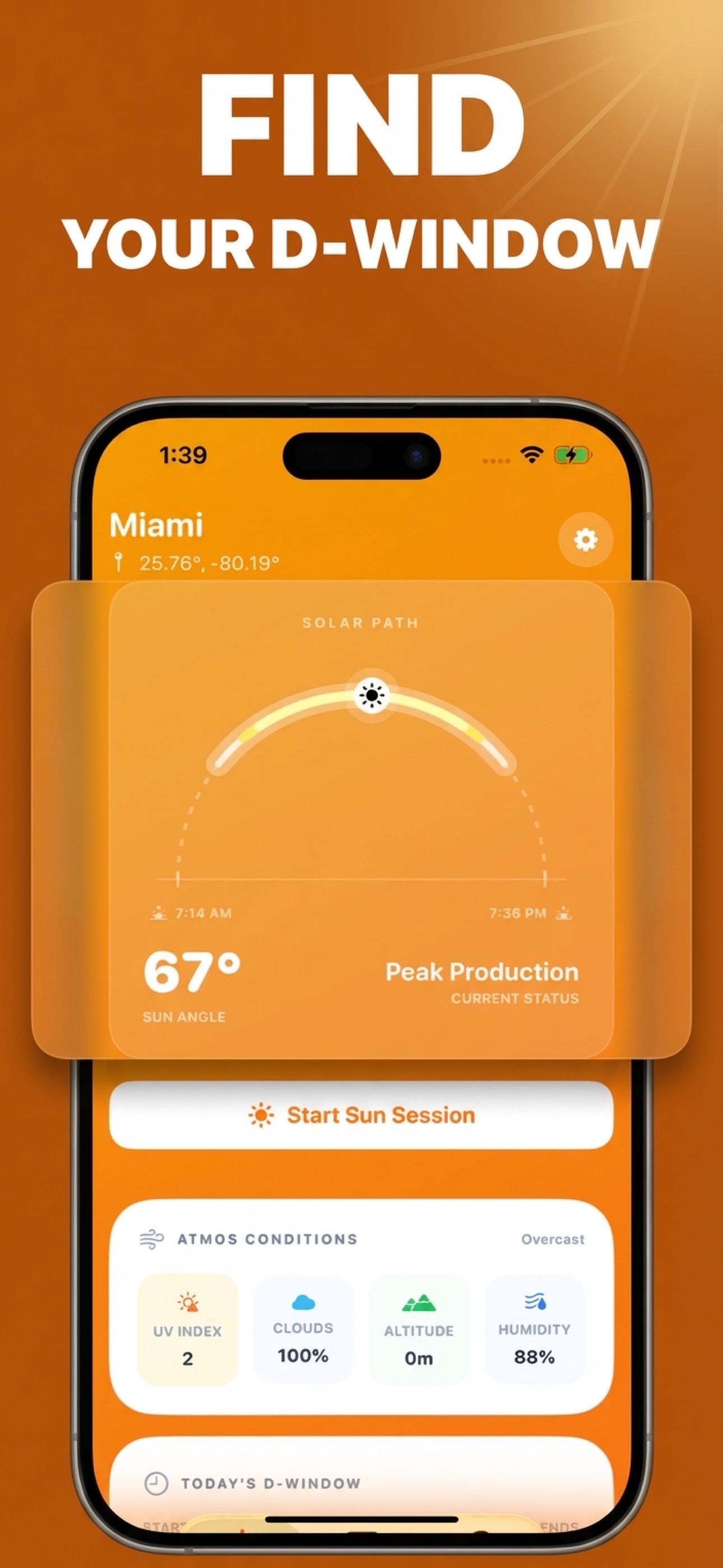
RayDay uses NOAA solar position algorithms to calculate your daily D-Window — the exact time range when the sun is above 35° and UVB rays can trigger vitamin D synthesis in your skin.
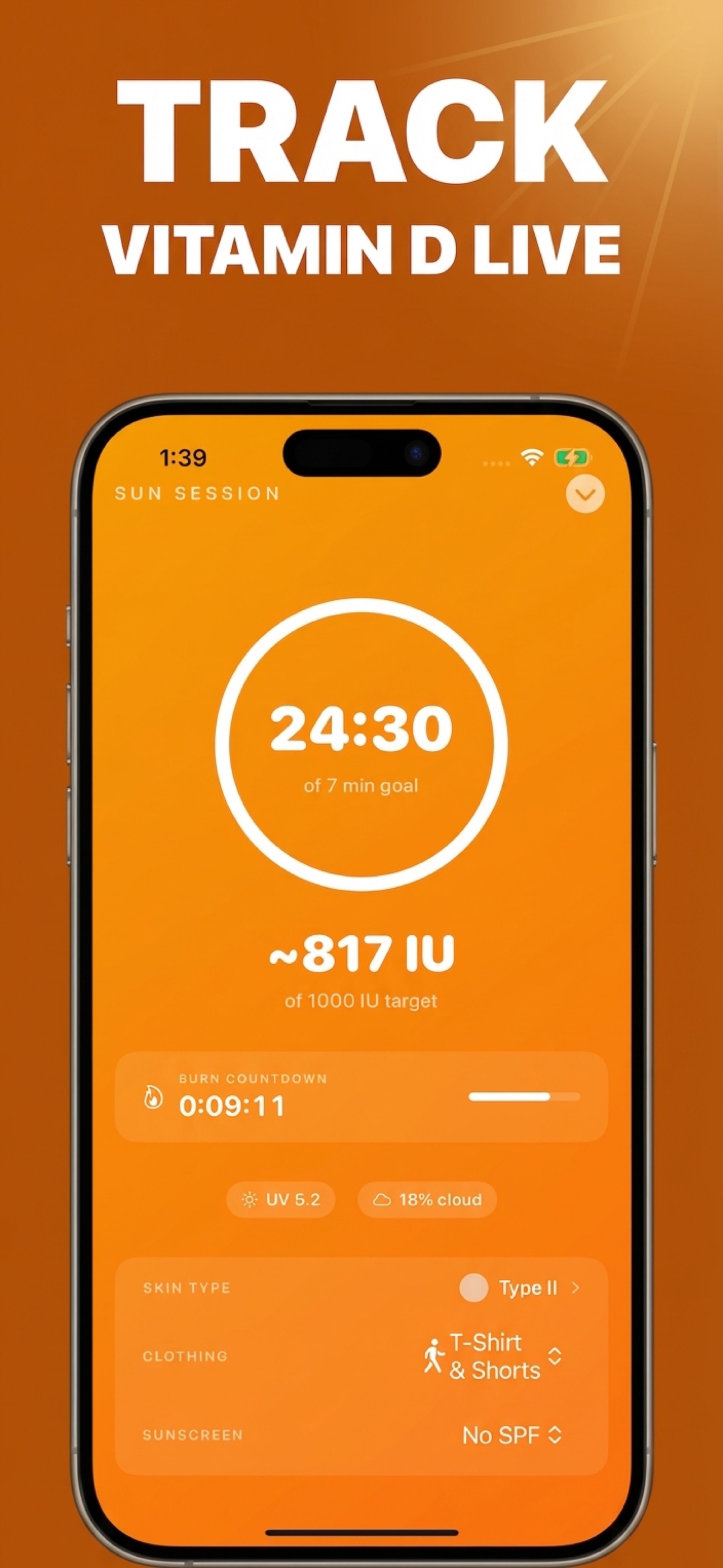
Start a sun session and watch your vitamin D (IU) accumulate in real-time. Based on Holick's Rule, factoring in your skin type, exposed skin area, cloud cover, altitude, surface albedo, and sun angle.
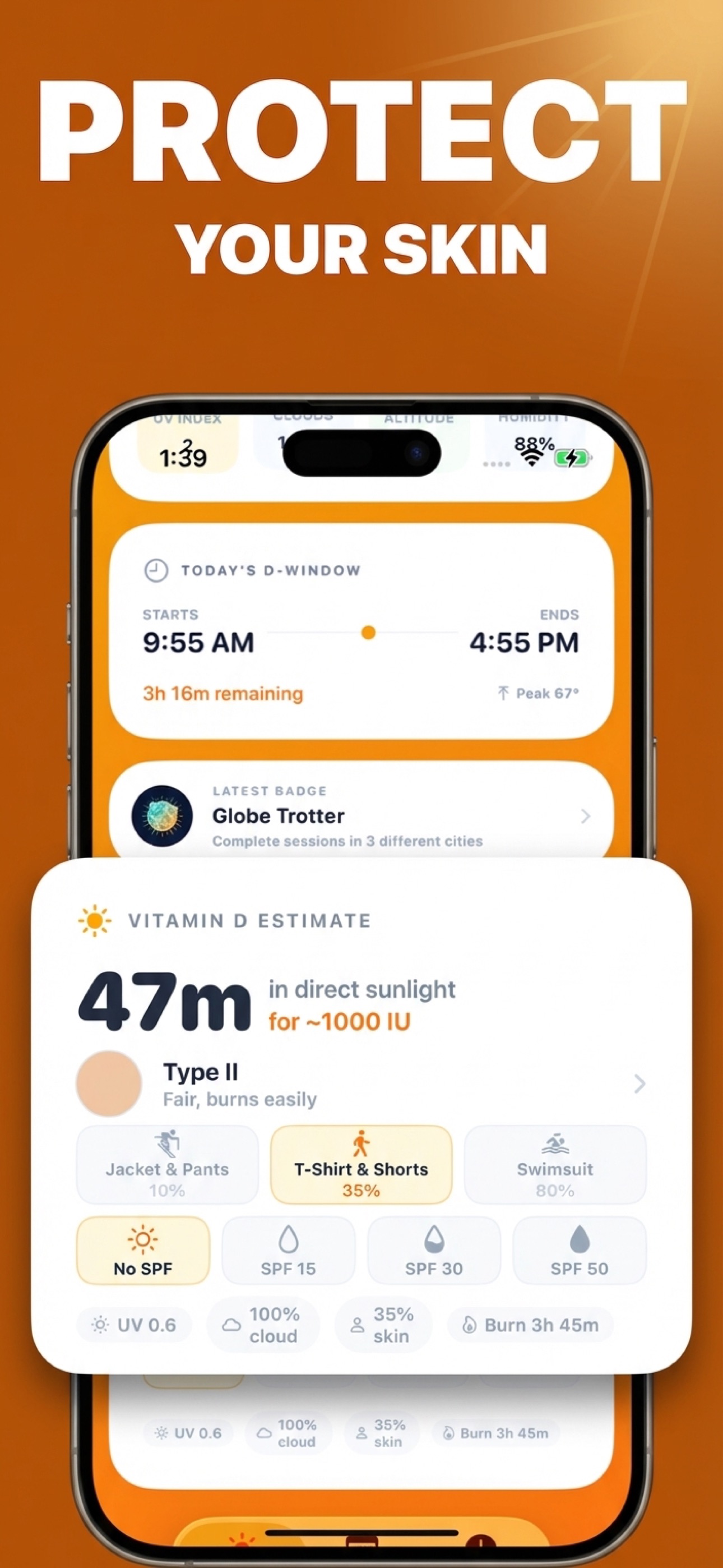
Know exactly how many minutes until you risk a sunburn. RayDay calculates your Minimal Erythemal Dose (MED) based on Fitzpatrick skin type, UV index, and SPF level — so you can get vitamin D safely.
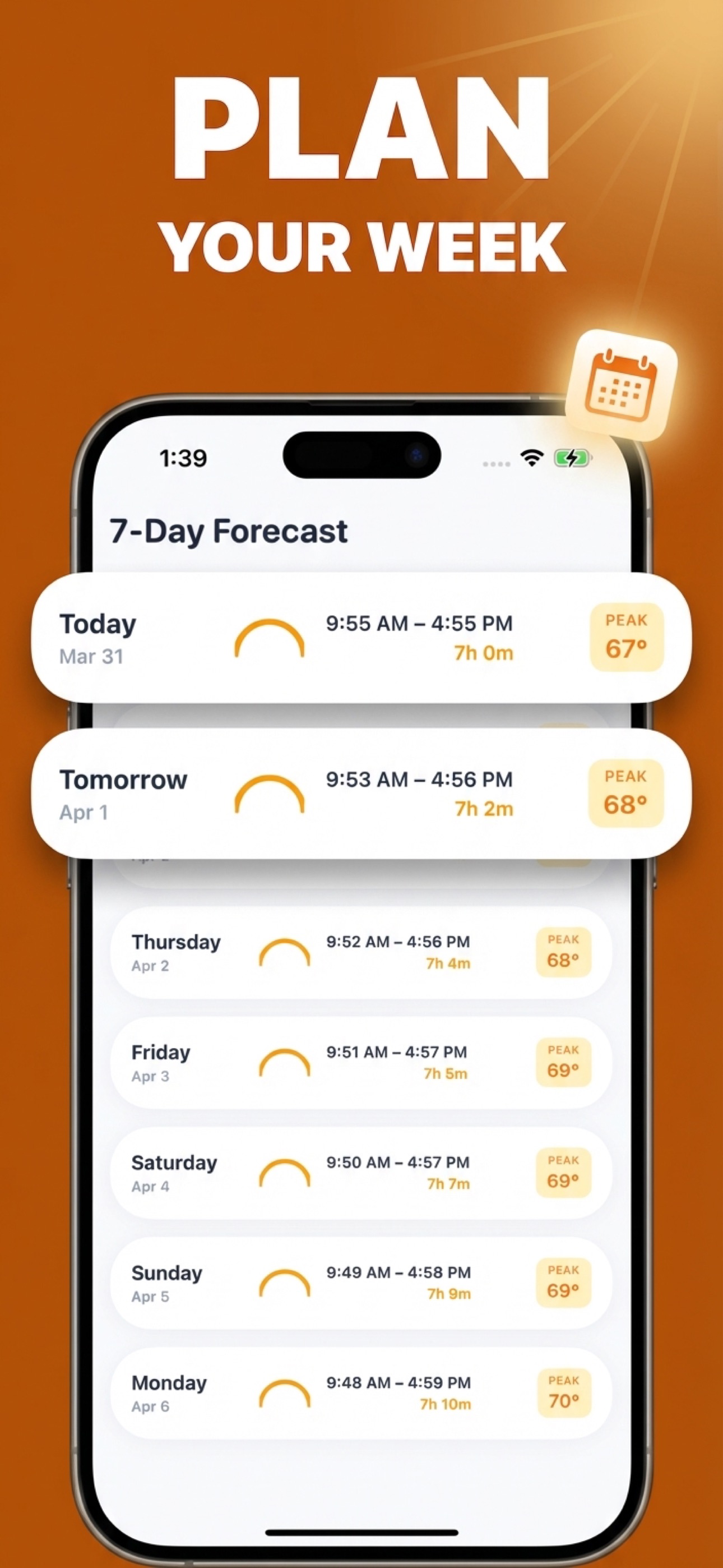
See your vitamin D windows for the entire week ahead. Plan outdoor time around peak UV hours with forecasted D-Window, Peak, and Super Peak time ranges.
Integrates real-time weather data including cloud cover, UV index, altitude (+11% per 1000m), humidity, and surface albedo (snow reflects 40-80% UV, sand ~15%, grass ~3%) for accurate estimates.
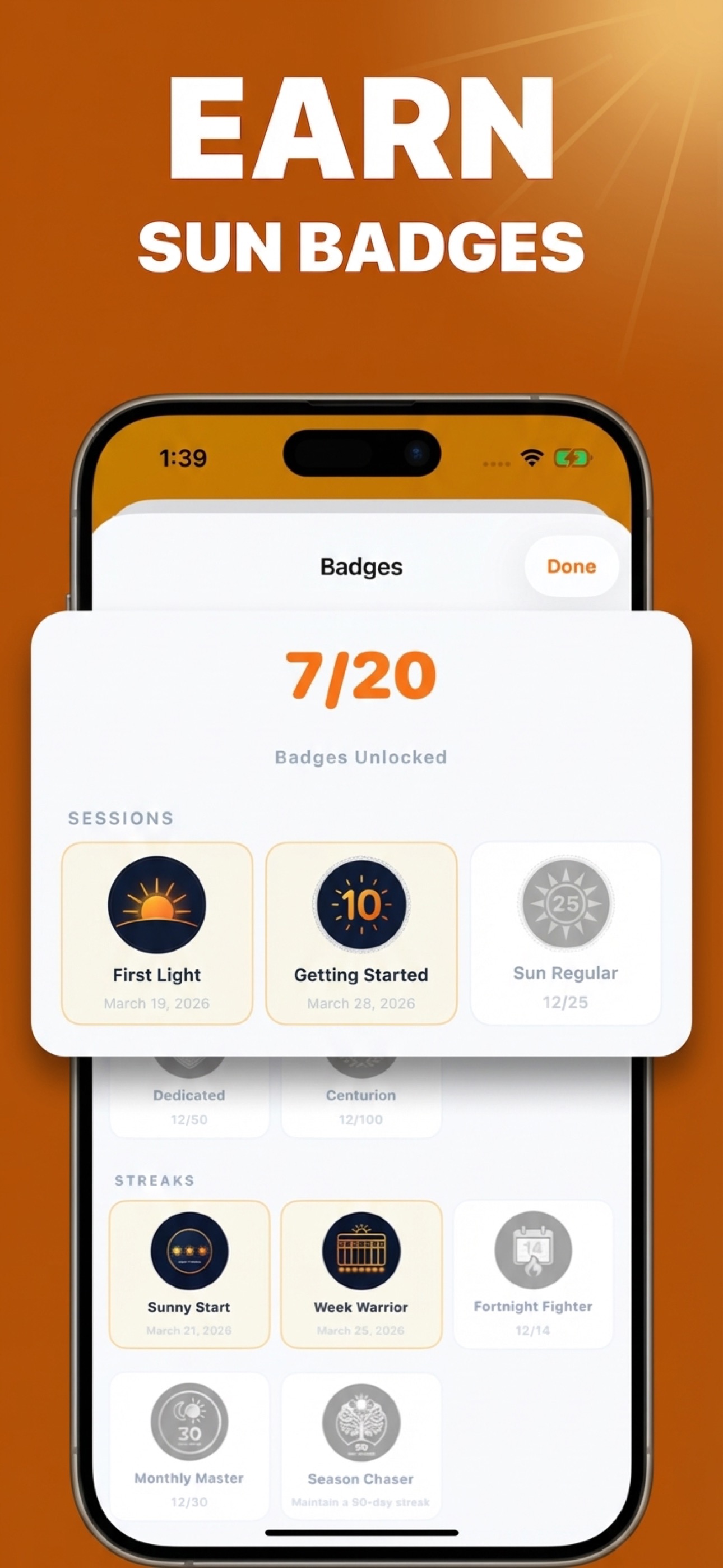
Earn achievement badges for sun session milestones, vitamin D goals, and streak targets. Browse your complete session history with IU totals, duration, and location for every session.
See today's D-Window, current sun angle, and session progress right from your home screen and lock screen — without opening the app.
Fully localized in 33 languages including English, French, German, Spanish, Italian, Japanese, Korean, Chinese, Arabic, Hindi, and more.
A warm, intuitive interface designed for clarity at a glance.


Built on peer-reviewed research and NOAA solar position algorithms.
RayDay uses Holick's Rule: 1/4 of your Minimal Erythemal Dose (MED) on 25% of your body surface produces approximately 1,000 IU of vitamin D₃. The app factors in your Fitzpatrick skin type, clothing coverage, SPF level, sun angle, cloud cover, altitude, and surface albedo (snow, sand, grass reflection) to estimate IU production every second during a sun session.
The D-Window is the daily time range when the sun altitude is above 35° — the minimum angle for UVB rays to penetrate the atmosphere and trigger vitamin D synthesis in your skin. Below 35°, UVB is filtered out by the atmosphere regardless of how long you stay outside. RayDay calculates this using NOAA solar position algorithms for your exact location.
The burn countdown estimates time to your Minimal Erythemal Dose (MED) — the UV energy needed to cause first reddening of your skin. It varies by Fitzpatrick type (200-1000 J/m²) and accounts for your SPF level. This is an estimate for informational purposes — individual sensitivity varies. Always consult a dermatologist for personalized sun safety advice.
Yes. RayDay works anywhere in the world using GPS or manual city search. Solar calculations are based on your exact latitude, longitude, and timezone. The app reverse-geocodes your position and fetches local weather data for cloud cover, UV index, and altitude.
Solar calculations work offline using NOAA algorithms. Weather data (cloud cover, UV index) requires a connection for the most accurate estimates, but the app works without it using solar position alone.
No. RayDay is for informational and educational purposes only. Vitamin D estimates are based on published scientific models but individual results vary significantly. Always consult a healthcare professional for medical advice about vitamin D supplementation and sun exposure.
Why midday sun — not morning — is when your body actually produces vitamin D.
A science-based guide to vitamin D production, Holick's Rule, and skin type factors.
Why over 1 billion people are deficient and how to optimize your sun exposure.